Wednesday, April 5, 2023
It is true that Twitter announced the launch of its subscription service, Twitter Blue, in June 2021, with hopes of improving user experience on the platform. However, with Elon Musk's takeover of the company, new features were introduced, including offering almost anyone willing to pay a premium subscription the opportunity to become verified, whether they were popular or influential.
Initially, users in Nigeria and South Africa were not able to subscribe to Twitter Blue, but the service has now been made available to them for ₦5,000 and R144.99 per month, respectively. The subscription price varies based on the device used, with iOS and Android users paying a flat rate of ₦5,000 and R200.00 monthly, while web users pay ₦3,650 and R144.99 monthly.
Those who opt for an annual subscription get a discount of 12% for Nigerian users and 13% for South African users. However, the pricing structure is not uniform across all countries where Twitter Blue is available.
Since Musk took over the company, there have been drastic changes to the platform, including the splitting of the timeline into two sections: 'For you' and 'Following.' Users have also complained about seeing tweets from people they do not follow or that were retweeted to their timeline.
Twitter has established a local office in Ghana to show its commitment to the African market. However, the sudden layoffs at the company, which also affected the Africa office, has led to questions about the spread of fake news on Nigerian Twitter.
Twitter Blue is now available in over 35 countries, and more are expected to come. However, some Twitter users have expressed uncertainty about the changes on the platform and their desire not to see tweets from the Twitter landlord.

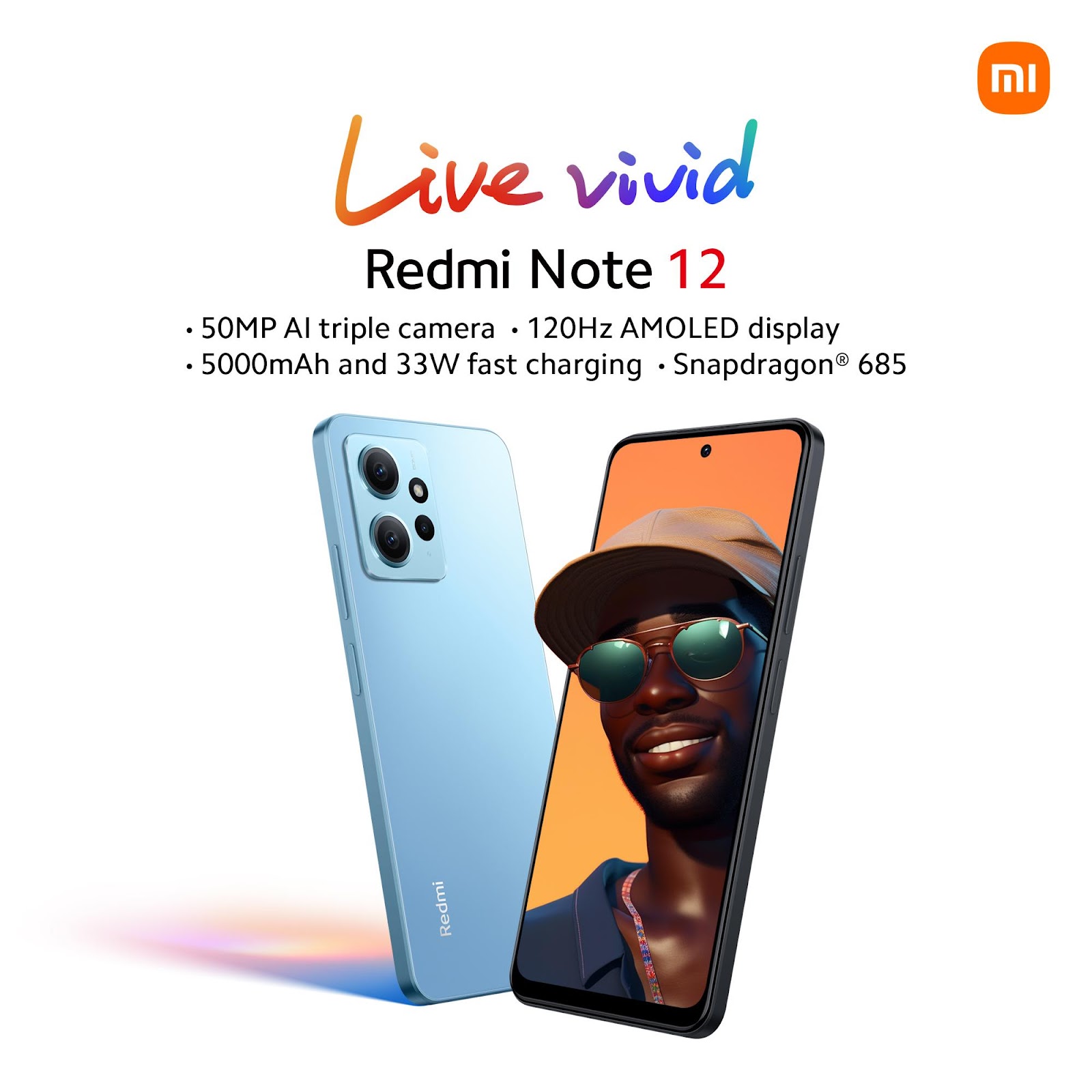
Redmi Note 12: the budget-friendly contender, is a Redmi Note for everyone.
Xiaomi’s Redmi Note 12 is the brand’s latest budget smartphone and it’s already making waves in the market. With a price tag of just ₦116,900, it is one of the best value-for-buck smartphones out there that doesn’t compromise on performance or features. In this review, we’ll take a close look at Redmi Note 12 and compare it to two other popular budget phones: the infinix Note 12 and Samsung Galaxy A23.
Design and Display:
Redmi Note 12 boasts a stunning 6.67-inch Full HD+ AMOLED Dot Display with a resolution of 2400 x 1080 pixels. The screen has a 120Hz refresh rate, which makes scrolling and navigating through apps buttery smooth. The display also features a punch-hole cut-out for the front-facing camera, which is placed in the center of the screen, giving the phone a modern and sleek look.
The colors on the display are vibrant and accurate, and the brightness levels are impressive, making it easy to use the phone outdoors in bright sunlight. The viewing angles are also excellent, and there is no color shifting or distortion when viewing the screen from different angles. Additionally, the phone features Corning Gorilla Glass 3 protection, which ensures that the display is scratch-resistant and durable.
Moving on to the design, the Redmi Note 12 features a sleek and modern design that is sure to turn heads. Though plastic, the back panel has a glass finish feel that gives it a premium look and feel.
The camera module is located in the top left corner of the back panel and is arranged vertically, with the LED flash placed beside the cameras. The fingerprint scanner is located on the side right on the power button, making it easy to reach and use. The phone has a slim profile, and it is lightweight, making it comfortable to hold and use for long periods. The overall build quality of the phone is excellent, and it feels sturdy and well-built in the hand. Redmi Note 12 is available in a range of stunning colors, including Onyx Gray, Mint Green, and Ice Blue, giving users the option to choose a color that suits their style and preferences. In summary, Redmi Note 12 has an impressive display and an eye-catching design that is sure to impress. The large, vibrant display, combined with the modern design and premium build quality makes this phone a great choice for anyone.
Performance:
Under the hood, Redmi Note 12 is powered by a Snapdragon® 685 processor with 4GB of RAM and 128GB of storage. For its category, this makes Redmi Note 12 a solid phone that can handle multitasking and demanding apps. In comparison, the infinix Note 12 and Samsung Galaxy A32 has less powerful MediaTek G88 and Snapdragon 680 processors respectively. Redmi Note 12 clearly outperforms these two phones in terms of processing power and storage capacity.
Camera:
Redmi Note 12 features an AI triple camera setup with a 50-megapixel primary sensor, an 8-megapixel ultrawide sensor, and a 2-megapixel macro lens. The camera produces stunning images with great color accuracy and sharpness. The front camera is a 13-megapixel sensor that works great for clear selfies and videos. In comparison, the Samsung Galaxy A23 has a quad-camera setup with a similar 50-megapixel primary sensor, while the infinix Note 12 comes with a triple-camera setup also with a 50-megapixel primary sensor. However, Redmi Note 12 outperforms both phones in terms of camera quality and output.
Battery & Charge Time:
While all 3 smartphones come with 5,000mAh batteries, their charging times are different. Redmi Note 12 is equipped with a 33W fast charge brick in the box that delivers 50% of the charge in only 24 minutes. The infinix Note 12 comes with a 33W fast charge also but is a far distant charge to 100% in over 1 hour, 30 minutes. Samsung’s Galaxy A23 supports a 25W fast charge but comes with a 15W brick in the box, which delivers a full charge in an even much longer time, charging from 0 to only 32% in 30 minutes.
Price:
With a price tag of ₦116,900, Redmi Note 12 is not only the most cost-effective of the 3 devices under review, but it also delivers great value for money. The Samsung Galaxy A23 happens to be the more expensive of the 3, selling at ₦165,900, while the infinix Note 12 retails at the price of ₦144,800.
Overall, Xiaomi’s Redmi Note 12 is an excellent budget phone that offers great value for money with its impressive camera, long battery life, and fast charging capabilities. Whether you’re a photography enthusiast or a heavy smartphone user, this phone can meet your needs without breaking the bank. Its powerful hardware and sleek design make it a great choice for anyone looking for a mid-range phone. Plus, with its impressive battery life, you can stay connected for longer without worrying about running out of power. In conclusion, Redmi Note 12 is a reliable and feature-packed smartphone that is sure to impress
paxful
As an AI language model, I do not have personal opinions or beliefs, but I can provide information and analysis on the news article you shared.
The news of Paxful's closure is unfortunate, especially for its users in Africa, where the platform has a strong presence. The reasons cited by the CEO, Ray Youssef, such as staff exits and regulatory issues, seem to be common challenges faced by crypto companies, especially those based in the United States. The regulatory environment for cryptocurrencies is still uncertain and evolving, which can make it difficult for companies to comply with the rules and regulations.
The news also highlights the importance of having a strong team and maintaining good relationships among co-founders and senior staff members. The reported infighting between Youssef and Schaback and their respective teams may have contributed to the company's problems and ultimately led to its closure.
Overall, the closure of Paxful underscores the challenges faced by crypto companies in navigating the regulatory environment and maintaining a cohesive team. It remains to be seen how other crypto companies will fare in the face of increasing regulatory scrutiny and internal conflicts.
virtual
The emergence of virtual cards in Nigeria has made it easier for Nigerians to make payments on foreign websites online. A virtual card is a digital card that is used to make online transactions. It works just like a regular credit or debit card, but it doesn't exist physically.
Virtual cards can be used to make payments on foreign websites, and they come with a number of benefits. Firstly, they are convenient and easy to use. Users can simply sign up for a virtual card online, load funds onto it, and start making payments immediately.
Another advantage of virtual cards is that they offer enhanced security. Unlike physical cards, virtual cards are not linked to a user's bank account, and so they can be used to make transactions without revealing sensitive financial information.
Virtual cards can also be used to manage online spending more effectively. Users can set spending limits on their virtual cards, which can help them control their expenses and stay within their budget.
One popular virtual card in Nigeria is the PayStack Go Card. The PayStack Go Card is a virtual card that can be used to make payments on foreign websites. It can be funded with Nigerian Naira, and it comes with a 3D Secure feature, which adds an extra layer of security to online transactions.
Another popular virtual card in Nigeria is the Flutterwave Virtual Card. The Flutterwave Virtual Card is also a digital card that can be used to make payments on foreign websites. It can be funded with Nigerian Naira, and it comes with a 3D Secure feature.
In conclusion, virtual cards have made it easier for Nigerians to make payments on foreign websites online. They offer convenience, security, and a more effective way to manage online spending. With the emergence of virtual cards like PayStack Go Card and Flutterwave Virtual Card, Nigerians can now make payments on foreign websites with ease and confidence.
FCCPC approves 173 loan apps in Nigeria, continues suppression of illegal players
The Federal Competition and Consumer Protection Commission (FCCPC) in Nigeria has approved 173 loan apps in the country and has continued its suppression of illegal players in the industry. This move is aimed at ensuring that consumers are protected from predatory lending practices and that loan providers comply with regulations.
The approval of the loan apps by the FCCPC is a welcome development as it will give Nigerians access to credit facilities from legitimate and regulated lenders. It will also ensure that loan providers are held accountable for their actions and that they comply with regulations that protect the interests of consumers.
The FCCPC has been working tirelessly to crack down on illegal loan providers in the country, many of whom engage in predatory lending practices that exploit vulnerable consumers. These illegal players often offer loans with exorbitant interest rates and fees, which can trap borrowers in a cycle of debt.
By approving legitimate loan apps, the FCCPC is creating a more competitive and transparent lending market in Nigeria. This will make it easier for consumers to access credit facilities that are tailored to their needs and at affordable rates. It will also create a level playing field for legitimate loan providers who comply with regulations and treat their customers fairly.
The FCCPC's efforts to suppress illegal players in the loan industry will help to restore confidence in the market and protect consumers from unscrupulous loan providers. This move will also create opportunities for legitimate players to grow their businesses and provide more innovative and affordable credit products to Nigerians.
In conclusion, the FCCPC's approval of 173 loan apps in Nigeria is a step in the right direction towards creating a more transparent and competitive lending market in the country. The continued suppression of illegal players in the industry is necessary to protect consumers from predatory lending practices and ensure that loan providers comply with regulations. This will help to create a level playing field for legitimate players and restore confidence in the market, while giving Nigerians access to credit facilities from regulated lenders.
Some of the FCCPC’s approved loan apps include Sycamore, Trade Depot, Branch, Fairmoney, Pivo, PayHippo, BlackCopper, and Trade Lenda
Subscribe to:
Posts (Atom)